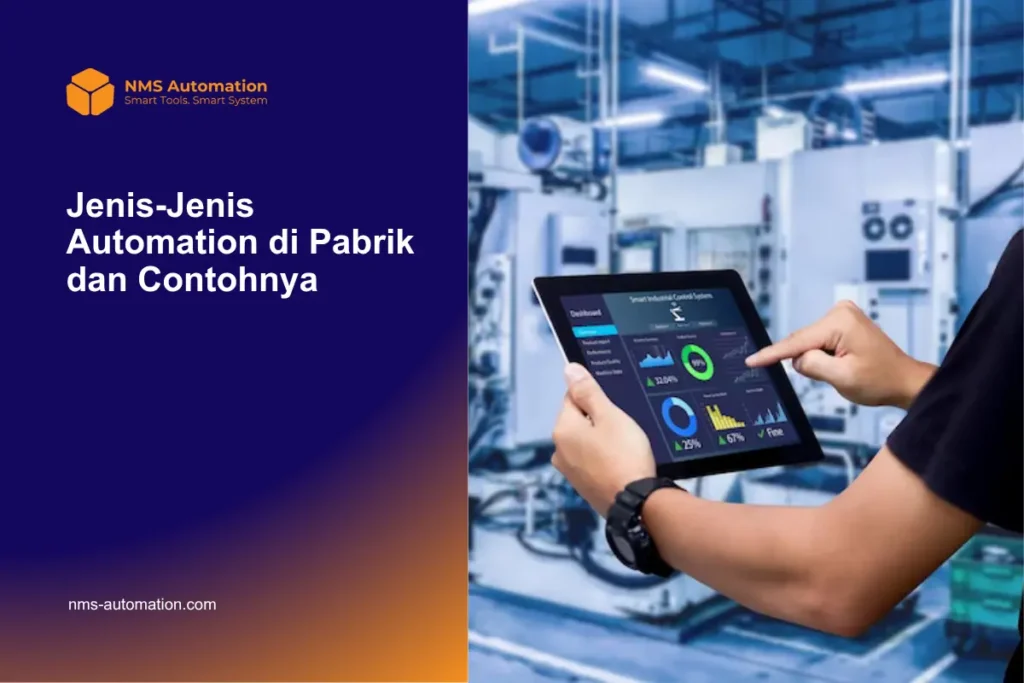
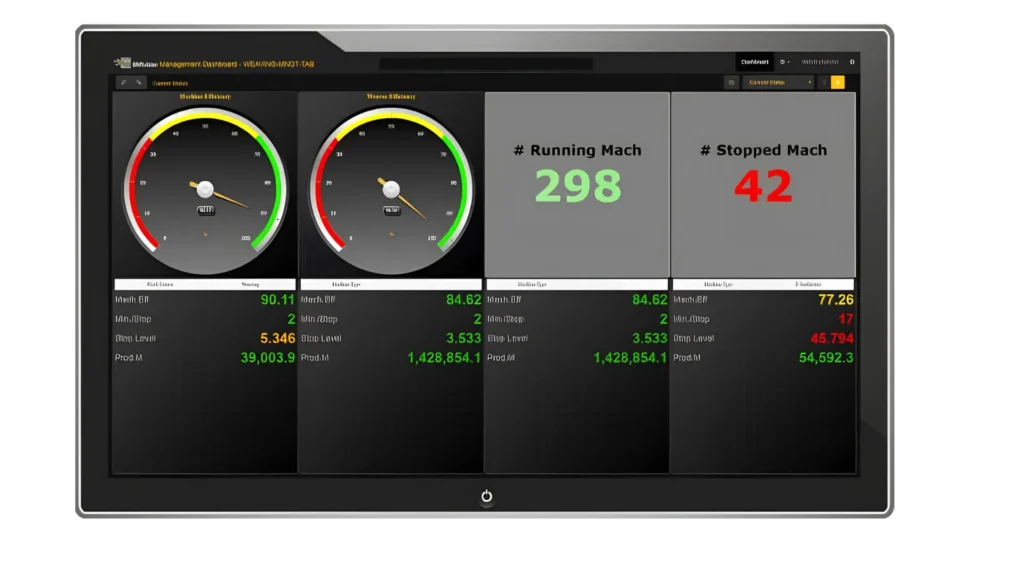
In modern industrial environments, maintaining machine reliability and minimizing unplanned downtime are no longer just maintenance goals—they are critical for operational survival. As factories rapidly transition into fully automated ecosystems (Industry 4.0), relying on reactive, run-to-failure maintenance is a costly mistake.
To maintain high Overall Equipment Effectiveness (OEE), modern industries require smarter ways to monitor equipment conditions in real time.
Table of Contents
Industrial monitoring systems help manufacturers detect abnormalities early, optimize maintenance planning, and ensure seamless production continuity through real-time data acquisition and analysis.
What is an Industrial Monitoring System?
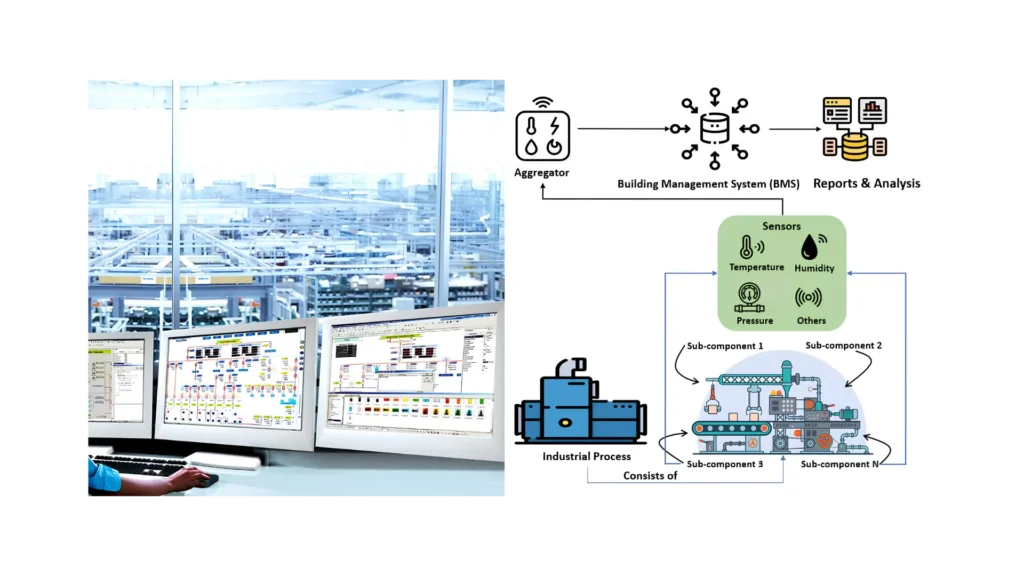
An Industrial Monitoring System is a comprehensive technological architecture designed to continuously observe, collect, and analyze operational data from machines, electrical grids, and production equipment.
Instead of waiting for a machine to break down, these systems use a network of sensors, controllers, and industrial communication protocols to track critical parameters, such as:
- Temperature and Humidity
- Voltage, Current, and Power Quality
- Grounding Connection Integrity
- Machine Vibration (Crucial for motor health)
- Pressure and Flow Rates
- Overall Energy Consumption
The collected data is instantly transmitted to monitoring software, HMI (Human-Machine Interface), or SCADA systems, giving plant operators real-time visibility and the ability to make faster, data-driven decisions.
The High Cost of Poor Visibility: Why Monitoring is Essential
Unexpected equipment failure does more than just stop a machine; it creates a ripple effect that significantly impacts industrial productivity and bottom-line costs.
Common problems caused by relying on manual inspections or poor monitoring include:
- Costly Production Downtime: Every minute a line is down costs thousands of dollars.
- Product Defects: Unnoticed machine degradation often leads to out-of-spec manufacturing.
- Safety Hazards: Electrical faults or overheating machinery can endanger personnel.
- Delivery Delays: Supply chain disruptions that damage client trust.
💡 Expert Insight from nms-automation:
By implementing real-time monitoring systems, facilities can shift from reactive (fixing what’s broken) to predictive maintenance—detecting micro-abnormalities and scheduling repairs before a catastrophic failure occurs.
Key Benefits at a Glance:
- Real-time equipment visibility across the entire plant floor.
- Early fault detection through automated alarm triggers.
- Drastic reduction in unplanned downtime.
- Improved industrial safety and compliance.
- Increased equipment lifecycle and better ROI on machinery.
Core Components of a Smart Monitoring Architecture
A robust industrial monitoring system relies on four integrated layers working seamlessly together:
1. The Sensory Layer (Sensors & Actuators)
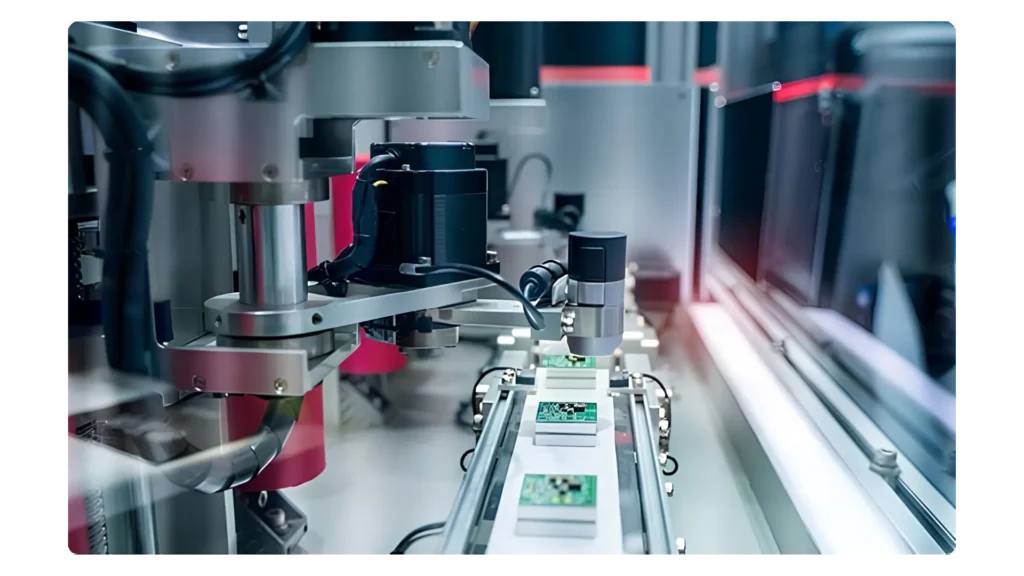
Sensors act as the “nervous system” of the factory, detecting and measuring physical conditions from industrial machines. Common sensors include:
- Temperature & Vibration Sensors: Essential for monitoring motor and bearing health.
- Current & Voltage Sensors: Track power quality and consumption.
- Proximity & Pressure Sensors: Ensure pneumatic and hydraulic systems operate safely.
2. Processing Edge (PLC / Controllers)
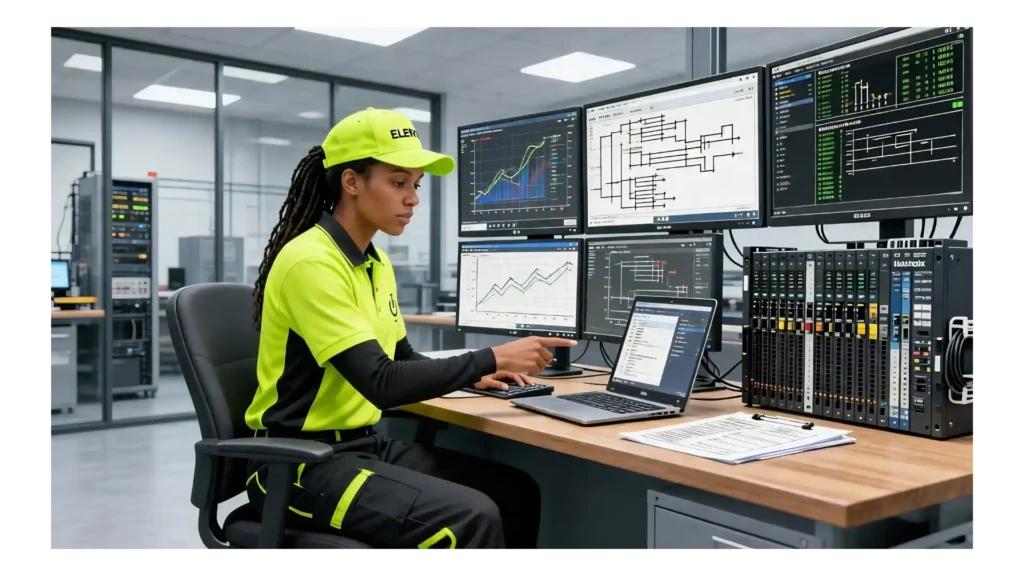
The PLC (Programmable Logic Controller) acts as the brain on the factory floor. It processes incoming sensor data at high speeds and executes automation logic. Core functions include:
- Evaluating data against predefined safety thresholds.
- Triggering instant local alarms.
- Activating safety protection systems (e.g., automated shut-offs).
3. Industrial Communication Networks
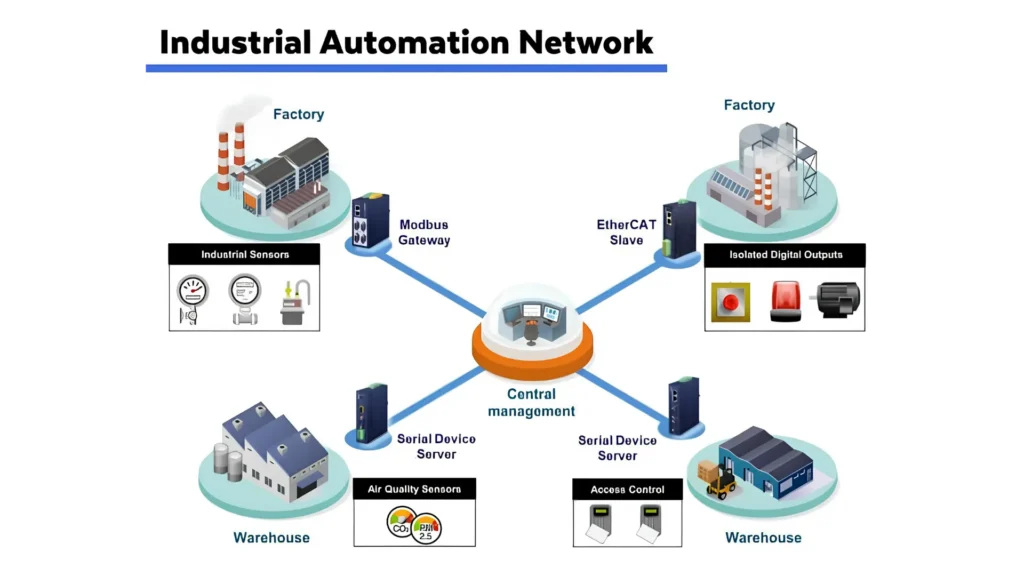
Stable data transmission is critical. Industrial protocols ensure that field devices communicate flawlessly with centralized monitoring software.
| Protocol | Typical Use Case in Factory Automation |
| Modbus (RTU/TCP) | Standard, widely used for simple sensor/device communication. |
| Profinet / Profibus | High-speed, real-time data transfer favored in Siemens ecosystems. |
| EtherNet/IP | Robust network standard commonly used with Allen-Bradley/Rockwell. |
| RS485 | Reliable serial communication for long-distance, noise-resistant data transfer. |
4. Visualization & Analytics (SCADA / Monitoring Software)
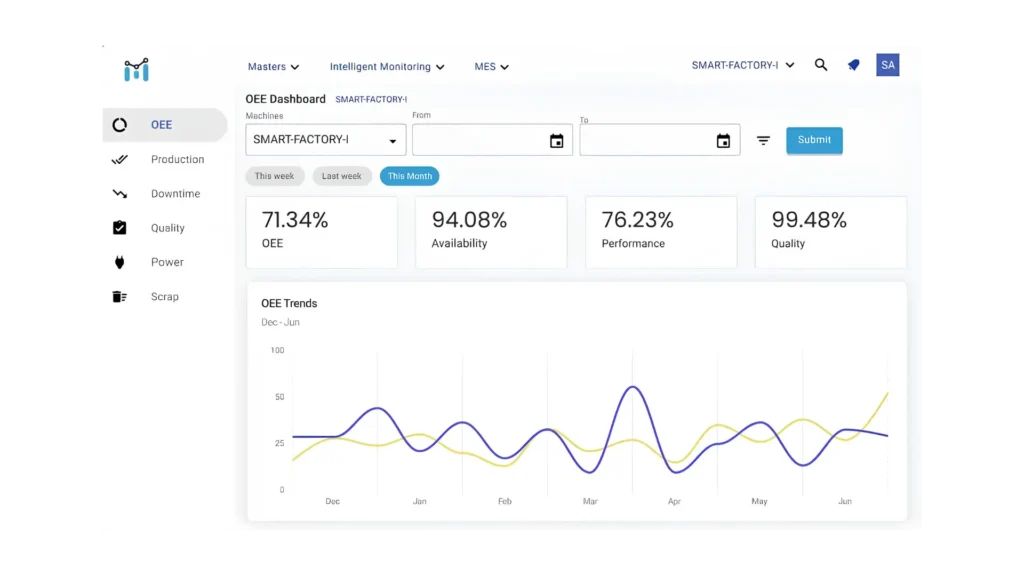
This is where raw data turns into actionable intelligence. Modern monitoring software visualizes operational metrics through intuitive dashboards. Operators can analyze historical trends, receive mobile alarm notifications, and generate compliance repo
Real-Time Grounding Monitoring for Industrial Safety
While monitoring motors and production lines is common, many facilities overlook their electrical foundation. Grounding systems are essential for protecting both sensitive industrial equipment and personnel from catastrophic electrical faults.
A specialized real-time grounding monitoring system continuously verifies grounding integrity. Instead of relying on annual manual checks, the system instantly alerts operators when resistance levels change or grounding is compromised.
Why it matters:
- Prevents lethal electrical hazards.
- Protects highly sensitive PLC and IT equipment from voltage spikes.
- Reduces the risk of electrical fire damage.
- Ensures 24/7 compliance with industrial safety standards.
Real-World Industrial Applications
Industrial monitoring systems are versatile and widely implemented across various critical sectors:
- Manufacturing Plants
Monitoring automated production lines, robotics, conveyor systems, and overall OEE. - Power Distribution & Utilities
Tracking electrical panels, energy consumption, power quality, and grounding infrastructure. - Food & Beverage
Ensuring strict temperature controls, pressure regulations, and hygiene compliance.
The Future of Monitoring: IIoT & Predictive Analytics
As we move deeper into the Industry 4.0 era, monitoring systems are evolving rapidly. Modern solutions deployed by forward-thinking platforms now leverage Industrial IoT (IIoT) to offer:
- Cloud & edge integration for multi-site visibility.
- Remote mobile access allowing managers to check plant status from anywhere.
- AI-Driven predictive analytics machine learning algorithms that predict exact failure dates based on vibration and heat trends.
| Power Distribution Systems | Used to monitor:Electrical panelsEnergy consumptionGrounding systemsPower quality | |
| The Future of Industrial Monitoring Systems | Modern monitoring systems are evolving rapidly with Industry 4.0 and Industrial IoT (IIoT).New technologies now support: Cloud monitoringRemote accessAI analyticsPredictive maintenanceMobile notifications | |
| ManufacturingPlants | Used to monitor:Production linesMotorsConveyor systemsAutomation equipment |
Take Control of Your Factory’s Reliability with nms-automation
You can’t manage what you don’t measure. Upgrading to a comprehensive industrial monitoring system is the most effective way to secure your plant’s efficiency, safety, and profitability.
Ready to eliminate unplanned downtime? Explore how nms automation specialized monitoring solutions can seamlessly integrate into your current factory setup. Contact our engineering team today for a custom platform demo.
FAQ About Industrial Monitoring Systems by NMS Automation
What is an Industrial Monitoring System?
An Industrial Monitoring System is an integrated technological architecture designed to continuously track, collect, and analyze real-time operational data from factory machinery. By combining sensors, PLCs, and visualization software, it gives plant operators full visibility over equipment health and factory floor efficiency.
How does a monitoring system reduce factory downtime?
It shifts your maintenance strategy from reactive (fixing things after they break) to predictive. By continuously tracking parameters like temperature, vibration, and electrical current, the system detects micro-abnormalities early. This allows maintenance teams to schedule repairs during planned stops rather than suffering from unexpected, costly breakdowns.
Why is real-time grounding monitoring crucial for industrial facilities?
While mechanical parts get a lot of attention, the electrical foundation is often overlooked. Real-time grounding monitoring prevents catastrophic electrical hazards, protects sensitive automation equipment (like PLCs) from voltage spikes, lowers electrical fire risks, and ensures 24/7 compliance with industrial safety standards.
What are the core layers of a smart monitoring architecture?
1. Sensory Layer: Sensors that measure physical data (vibration, heat, pressure).
2. Processing Edge: PLCs or controllers that process data locally and trigger instant safety actions.
3. Industrial Communication Networks: Protocols like Modbus, Profinet, or EtherNet/IP that transfer data securely.
4. Visualization & Analytics: SCADA or cloud dashboards that turn raw data into actionable insights.
Can NMS Automation solutions be integrated with legacy machinery?
Yes, absolutely. NMS Automation solutions are built with high compatibility in mind. By supporting standard industrial communication protocols (such as Modbus and RS485), the monitoring platform can be seamlessly retrofitted into your existing factory setup without requiring an expensive overhaul of your legacy machinery.